
Fauna and flora
Richness and diversity of wildlife
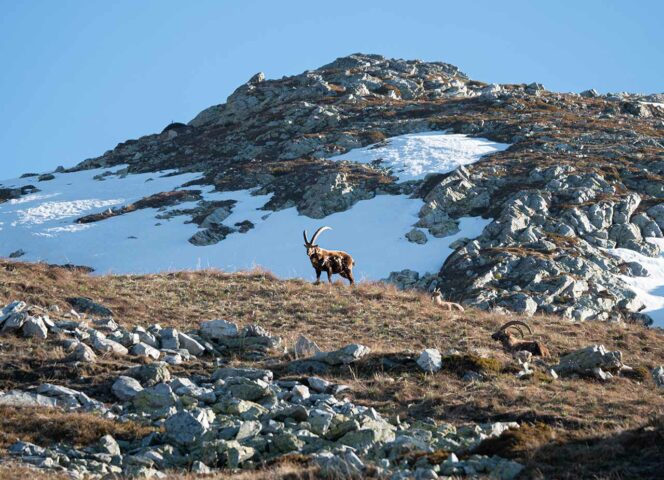
The rich wildlife of the Vanoise National Park is undeniable: from large ungulates to birds, from insects to amphibians.
Herbivores (deer, roe deer, chamois, and ibex—all of which are abundant in the Vanoise), rodents (the mountain hare, which changes its coat with the seasons, the marmot , found mainly in the vast alpine meadows, various voles including the snow vole and the collared vole), carnivores (fox, badger, marten, stone marten, ermine), bats (common pipistrelle, northern long-eared bat), and insectivores such as the water shrew.
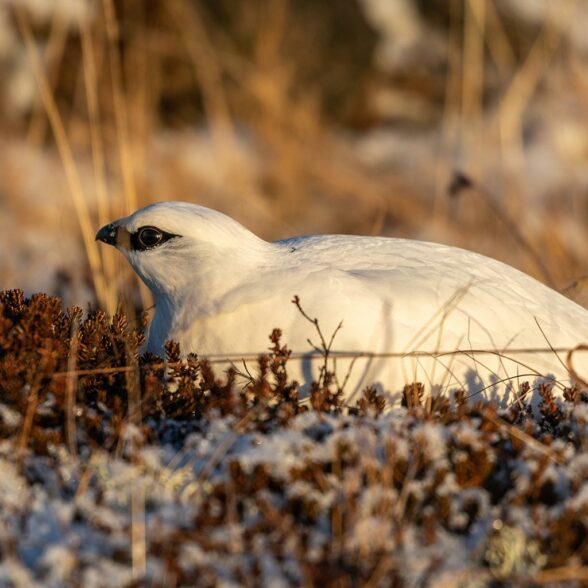
Among the 125 bird species nesting in Vanoise are: golden eagle, crossbill, nutcracker, Tengmalm's owl, black flycatcher, long-eared owl, rock blackbird, black grouse, black grouse, rock partridge, rock ptarmigan, black woodpecker, three-toed woodpecker and tichodromus.
A third of France's flora in Vanoise
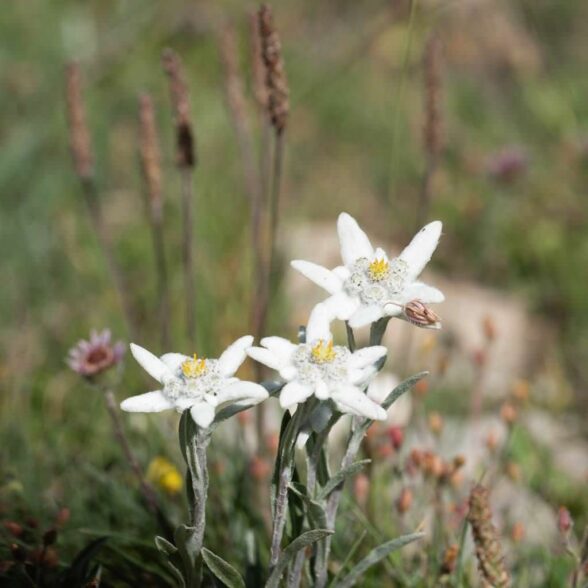
The latest summary of the flora of France, "Flora Gallica", published in 2014, lists around 5,000 species of vascular plants (ferns and allied plants, conifers and flowering plants) in mainland France. The Vanoise massif alone accounts for 1,700 species, i.e. a third of France's flora on less than 0.5% of the national territory!
This exceptional diversity can be explained by the variety of environments present, linked to the wide altitudinal gradient, the range of exposures and the marked differences in the chemical composition of rocks and soils.
Adopt the "Parc attitude
Indispensable for protecting an exceptional and fragile natural environment!
Walking, running, photographing, smelling, listening, breathing, contemplating, observing, learning, passing on, respecting...
- Come onfoot, without your dog (even on a leash), and leave your mountain bike and paraglider at home.
- Admirethe beauty of the flowers without picking them - they won't grow back on your property.
- Feed yourselfwith tasty local produce, but don't feed the marmots.
- Optimizeyour water and electricity consumption in the refuges
- Initiate yourselfto the calm of the mountains, to tranquillity... disconnect
- Followthe trails and don't cut the laces on the way down
- Takethe shuttle bus instead of your car
A privileged encounter with nature
Park rangers, whose duties within the national parks are wide-ranging, are offering a series of events all summer long to introduce you to their work and help you uncover the secrets of the natural world around us.
Don’t hesitate to reach out to mountain guides certified under the “Esprit Parc” program. While ensuring your safety on snow-covered trails, they’ll capture your attention, spark your curiosity, and make you want to learn more about the mountain environment. This time of year is perfect, for example, for spotting marmots emerging from hibernation to soak up the sun’s warmth.
Would you like to learn more about Vanoise National Park? Visitthe exhibition (free admission) at the Maison de la Vanoise in Val-Cenis Termignon or check out the official website: www.vanoise-parcnational.fr
All summer long, the park rangers of Vanoise National Park and mountain guides certified under the “Esprit Parc” program will be hosting events to share insights into their profession and their work environment.